
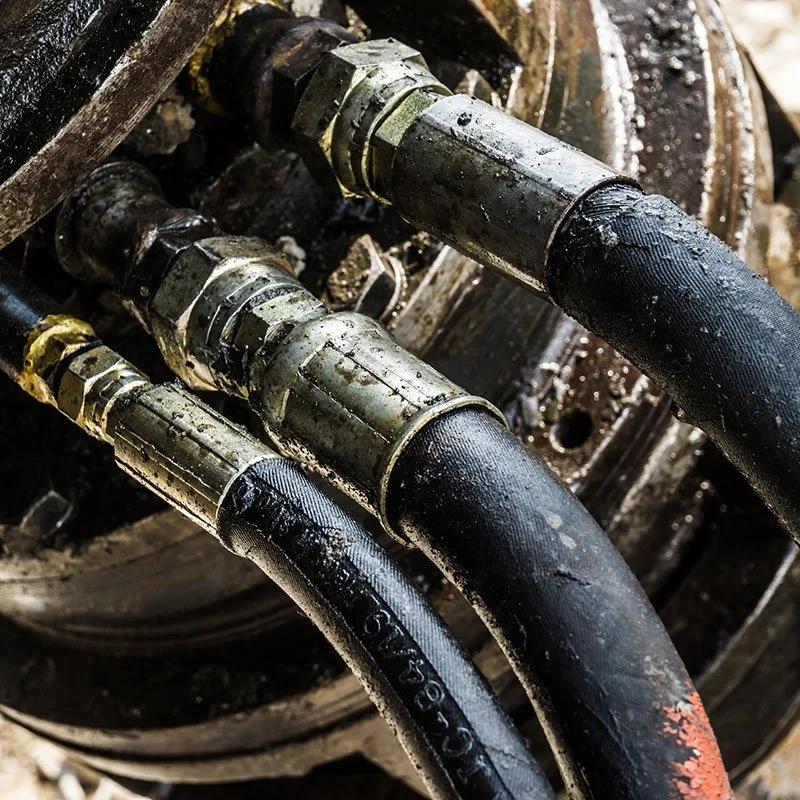
Learn five common warning signs of hydraulic system problems, including fluid leaks, unusual pump noise, overheating, slow movement, and pressure fluctuations. Explore maintenance considerations and hydraulic solutions from Beetle Technology Malaysia.
Industrial hydraulic systems rarely fail without prior warning. For manufacturing plants, presses, injection moulding lines, and heavy machinery across Malaysia, recognizing early operational symptoms before a minor seal leak or suction restriction escalates is the most effective way to prevent unplanned downtime, protect high-value pumps and actuators, and plan cost-effective hydraulic system maintenance in Malaysia.
5 Warning Signs Your Hydraulic System Needs Attention
Hydraulic Fluid Leakage
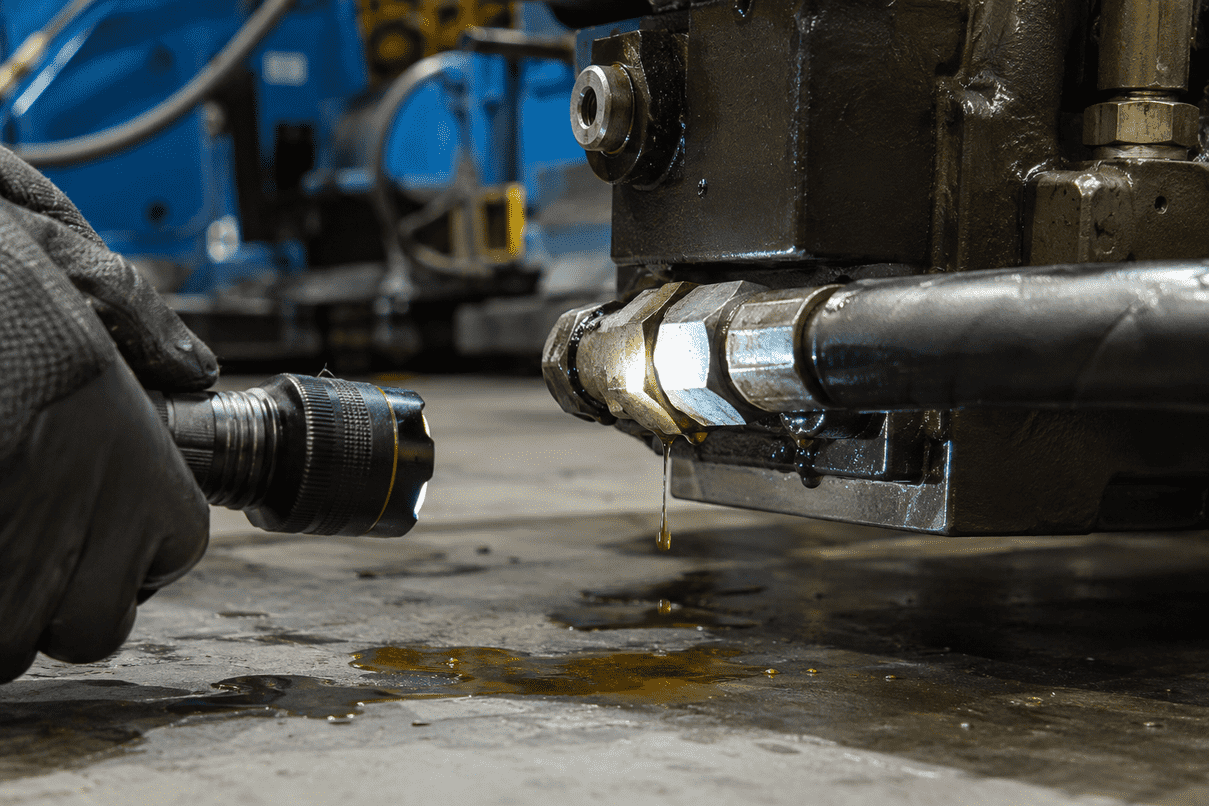
Visible oil drips at fittings, hoses, or cylinder rod seals reduce system efficiency and introduce contamination hazards.
Read Technical Breakdown →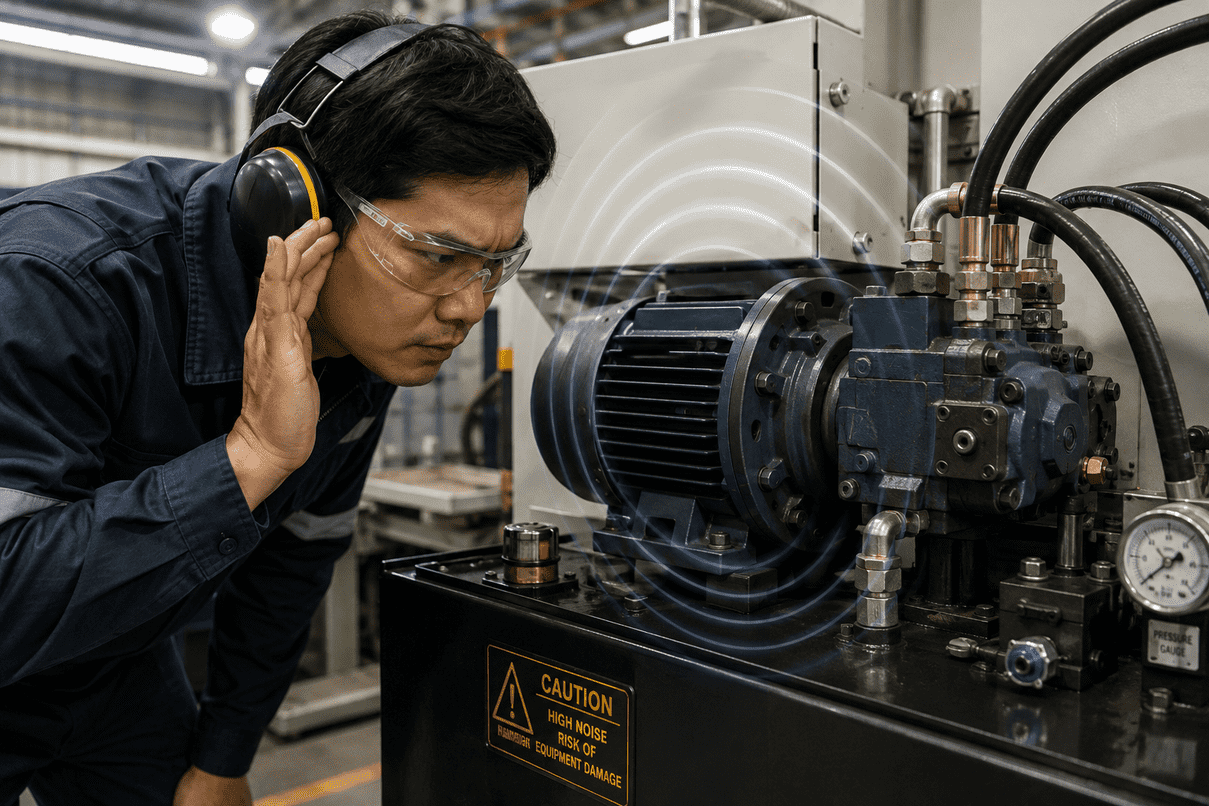
Unusual Noise or Vibration
Whining, knocking, or rattling from a hydraulic pump often points to cavitation, aeration, or mechanical misalignment.
Read Technical Breakdown →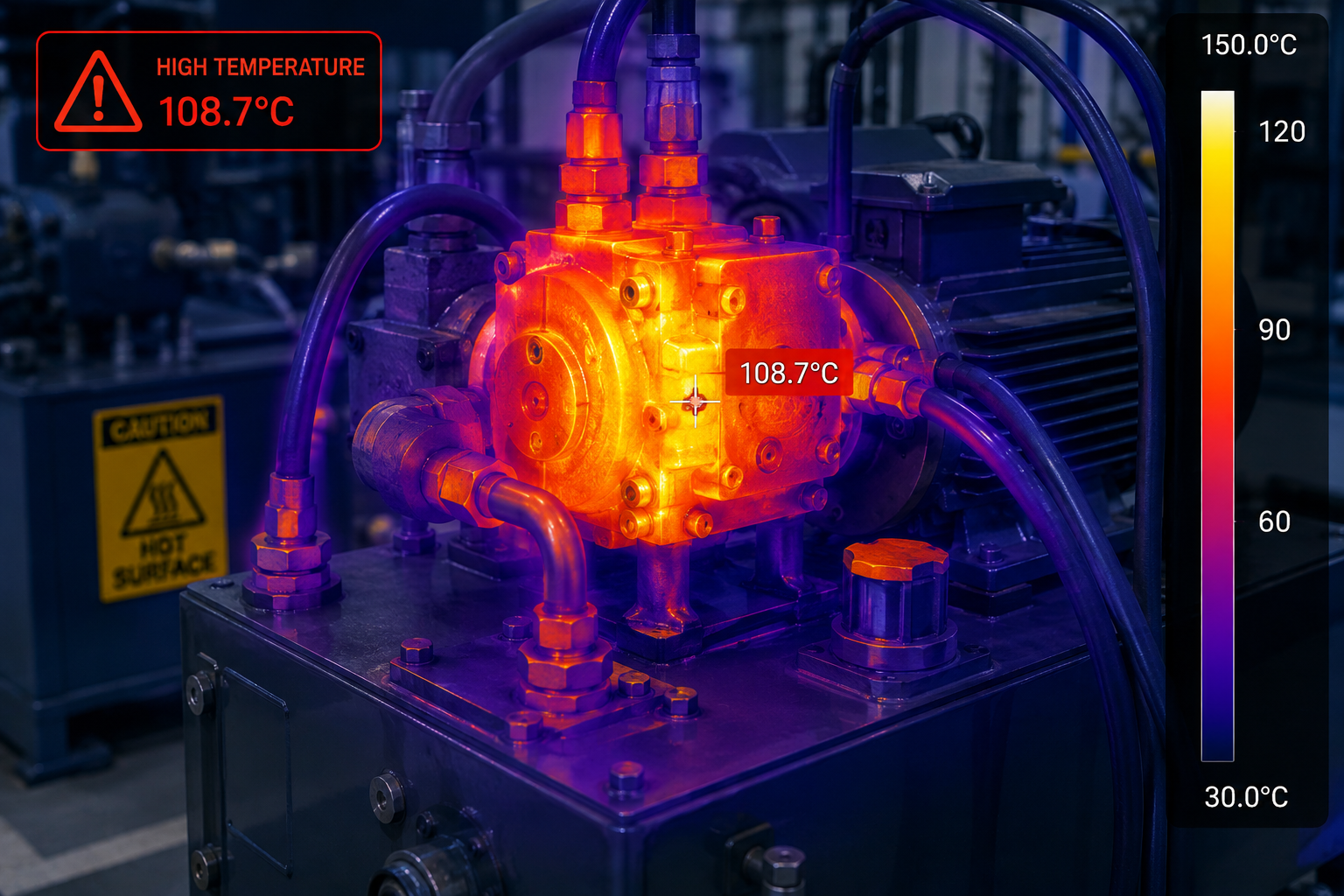
Hydraulic System Overheating
Excessive fluid and housing temperatures accelerate oil oxidation, degrade seals, and indicate wasted energy.
Read Technical Breakdown →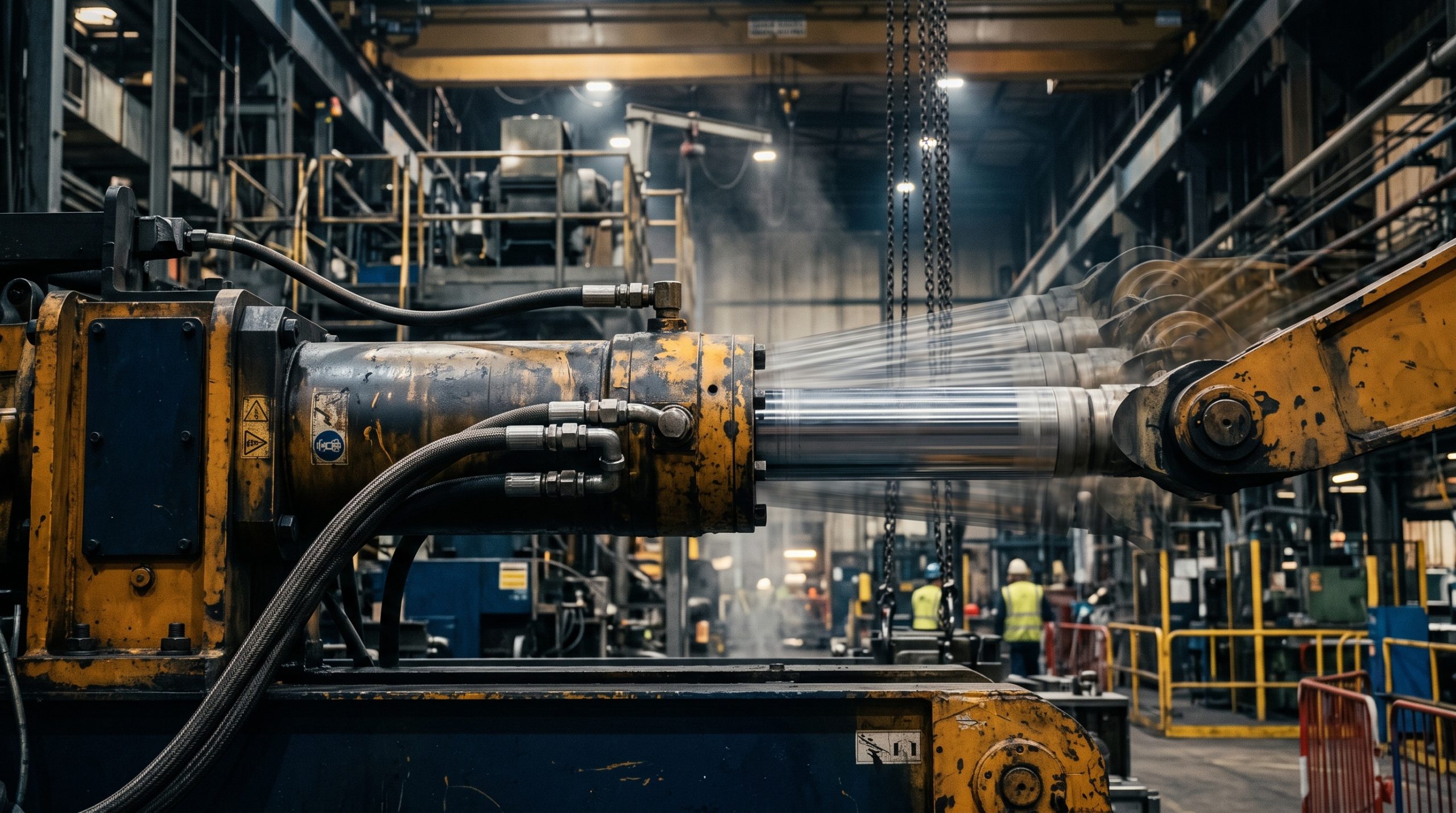
Slow or Irregular Movement
Hesitant or sluggish cylinder extension often signals internal leakage, flow restrictions, or declining pump output.
Read Technical Breakdown →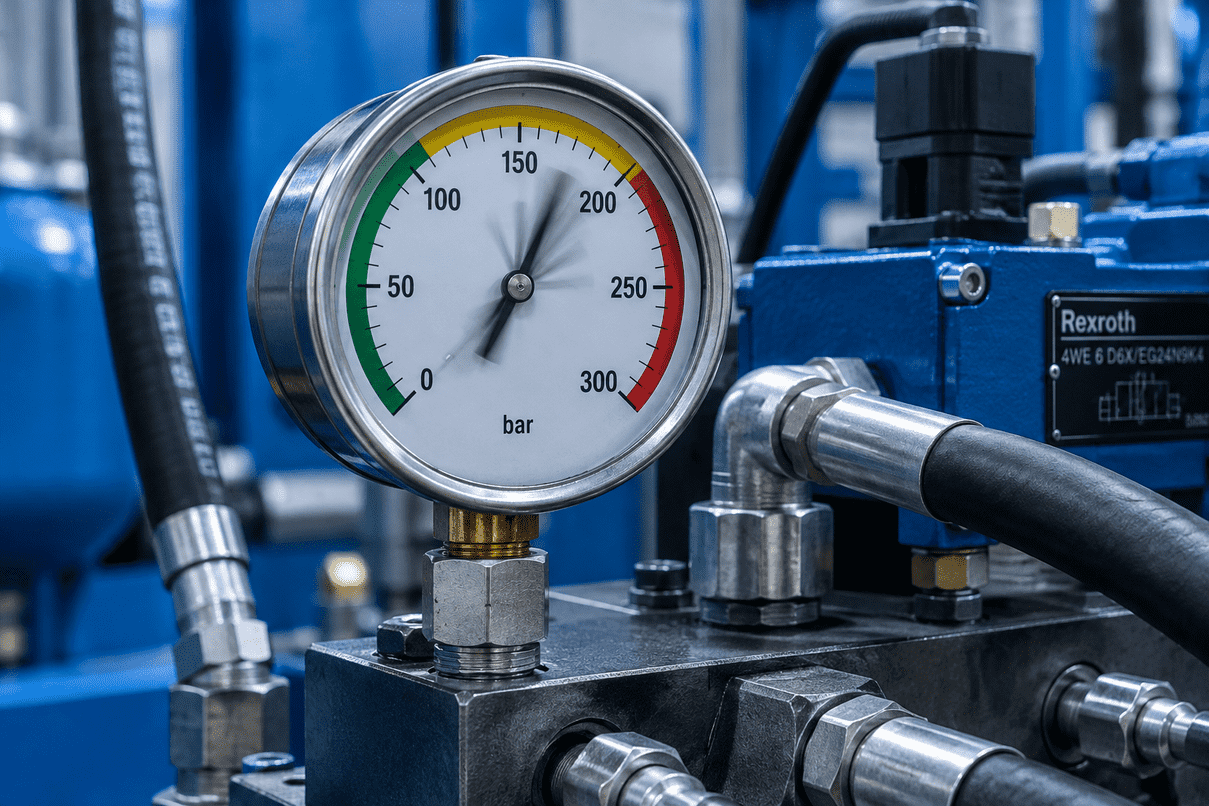
Fluctuating Pressure
Erratic pressure gauge readings under load may indicate relief valve instability, internal bypass, or entrained air.
Read Technical Breakdown →Hydraulic Fluid Leakage
External hydraulic fluid leakage is one of the clearest visual indicators that a system requires attention. Even slow drips around hose assemblies, manifold ports, or actuator rod glands lead to continuous fluid loss, slip hazards on the factory floor, and dirt ingress past worn wiper seals.
Possible Causes
- Hardened, extruded, or worn elastomeric O-rings and rod seals
- Loose flare or bite-type tube fittings due to vibration
- Hose abrasion, aged outer covers, or improper bend radius
- Scored cylinder rods or pitted sealing surfaces
Inspection Considerations
- Clean suspect fittings and trace the exact origin using an inspection light
- Check reservoir sight glass levels and log top-up frequency
- Inspect hose routing for rubbing against steel frames
- Verify fitting thread types and torque specs after depressurizing
Unusual Pump Noise or Vibration
Industrial hydraulic power units operate with a steady, familiar hum. When a unit begins producing a high-pitched whine, rattling sound, or physical knocking, it often points to developing hydraulic pump problems or fluid intake issues that can rapidly score internal pumping elements.
Possible Causes
- Cavitation: Restricted pump suction caused by clogged suction strainers or high fluid viscosity
- Aeration: Air drawn into the suction line through loose clamps or low oil levels
- Worn drive couplings or motor-to-pump shaft misalignment
- Internal wear on pump bearings, vanes, gears, or pistons
Inspection Considerations
- Check the reservoir sight glass for foamy, milky, or aerated oil
- Inspect suction hoses, clamps, and inlet strainer condition
- Check motor-pump bellhousing bolts and coupling alignment
- Verify fluid viscosity grade matches operating ambient temperatures
Hydraulic System Overheating
Hydraulic system overheating indicates that the circuit is generating heat faster than the reservoir and heat exchangers can dissipate it. Excessive operating temperatures thin out hydraulic oil, reduce film strength, accelerate sludge formation, and permanently harden seals.
Possible Causes
- Fouled air-blast oil coolers or scaled water-cooled heat exchangers
- Continuous fluid bypass over a stuck or improperly set pressure relief valve
- Internal volumetric leakage inside worn pumps, valves, or cylinders
- Low reservoir fluid level reducing residence cooling time
Inspection Considerations
- Monitor tank thermometer readings and compare against machine baseline
- Use an infrared thermometer or thermal camera to locate hot spots
- Inspect cooler fins for dust buildup and verify cooling fan operation
- Check return lines downstream of relief valves for abnormal temperature spikes
Slow or Irregular Actuator Movement
In hydraulic circuits, actuator speed is governed by flow rate. When a hydraulic cylinder or motor moves slowly, hesitates mid-stroke ("stick-slip"), or struggles to maintain cycle times under load, effective flow is not reaching the work port.
Possible Causes
- Internal leakage past worn cylinder piston seals or valve spools
- Partially clogged filters, kinked hoses, or misadjusted flow-control valves
- Reduced pump volumetric efficiency due to internal wear
- Air trapped inside the cylinder barrel causing spongy movement
Inspection Considerations
- Compare unloaded vs. loaded cycle times across production runs
- Check filter clogging indicators (differential pressure gauges)
- Inspect mechanical guides and load alignment for physical binding
- Check whether sluggishness affects a single actuator or the entire circuit
Fluctuating Hydraulic Pressure
Consistent clamping force, tonnage, and torque depend on stable pressure control. Hydraulic pressure problems—such as erratic gauge needle oscillation, pressure drops under load, or unexpected pressure spikes—compromise product quality and stress circuit components.
Possible Causes
- Contamination or wear on pressure relief, reducing, or proportional valve seats
- Malfunctioning pump pressure compensator controls
- Lost nitrogen pre-charge or bladder failure in hydraulic accumulators
- Entrained air compressing and decompressing inside the circuit
Inspection Considerations
- Verify gauge accuracy using a calibrated test gauge at diagnostic test points
- Observe if fluctuations coincide with specific directional valve shifts
- Check proportional valve electrical connectors and command signals
- Review accumulator nitrogen pre-charge and fluid cleanliness records
Quick Plant Maintenance Diagnostic Checklist
Select any warning signs currently observed on your equipment to generate an inspection note for your maintenance team:
Symptom-to-Possible-Cause Reference Matrix
| Warning Sign | Common Possible Causes | Initial Safe Checks |
|---|---|---|
| 01. Fluid Leaks | Worn seals, loose fittings, hose abrasion, rod scoring | Visual flashlight trace, reservoir level check, hose routing inspection |
| 02. Pump Noise / Vibration | Cavitation, aeration, coupling misalignment, internal wear | Check oil level & foam, inspect suction strainer & inlet clamps |
| 03. System Overheating | Blocked oil cooler, relief valve bypass, internal leakage | Check cooler fins/fan, infrared temperature scan across valves |
| 04. Slow Movement | Cylinder piston bypass, clogged filters, pump wear, air in circuit | Time stroke cycles, check filter clogging indicators |
| 05. Pressure Fluctuations | Contaminated relief/proportional valve, compensator issue, accumulator loss | Verify with calibrated test gauge, log when drops/spikes occur |

